
Bear (Michael Johnston) is a nice guy. He works at Cassell’s Music alongside his friends Ian (Cooper Tomlinson), Nikki (Inde Navarrette), and Sarah (Megan Lawless), whose dad owns the store. But Bear is lonely. He lives in his grandmother’s house, his parents are absent, and one day he comes home to find his cat, Sandy, dead after getting into some medication—an uncomfortable scene, helped by the fact that the cat looks obviously fake. Bear has been in love with Nikki for years but can’t quite build up the courage to tell her. He practices what he wants to say to a polite waitress while Ian looks on and offers his critique. He tries to tell Nikki how he feels numerous times, but always chickens out—even when she asks him outright. Bear had even bought her a gift: hearing that she had lost her crystal necklace, he visited an occult store intending to replace it, but left with something different: a One Wish Willow. But the poor bastard couldn’t bring himself to give her that, either. Finally feeling the weight of his own passivity, Bear snaps the willow, wishing Nikki would love him more than anyone in the whole fucking world.
Obsession is Curry Barker’s sophomore feature, but the 26-year-old got his start online, making sketch comedy and short horror films with Tomlinson. Barker’s filmmaking is impressive alongside Taylor Clemons’s remarkable cinematography. The film is genuinely unnerving as Nikki’s behaviour becomes increasingly disturbing and erratic. Clemons’s camera often throws Nikki into shadow, while keeping Bear in the light. In one scene, she is standing hauntingly in the corner of the bedroom, in a silhouette with her eyes lit up like a wolf, watching Bear sleep. It is genuinely chilling and renders her almost inhuman. The filmmaking suggests that Nikki, forced through magic to love Bear, isn’t really Nikki anymore—she is something darker, while Bear, still in the light, is the good guy. This is a very effective technique that plays with audience expectations. The lighting, which is often warm at times, does a lot to build atmosphere and tension, alongside the film’s unsettling score. While Obsession was shot on digital, it has soft visuals. Clemons underexposes the night scenes to make them feel murky and dreadful, to capture the terrifying world Bear is living in—and it is definitely felt as an audience member. You get a sense of being trapped with him in this nightmare, unsure of how he’s going to get out, if that’s even possible.
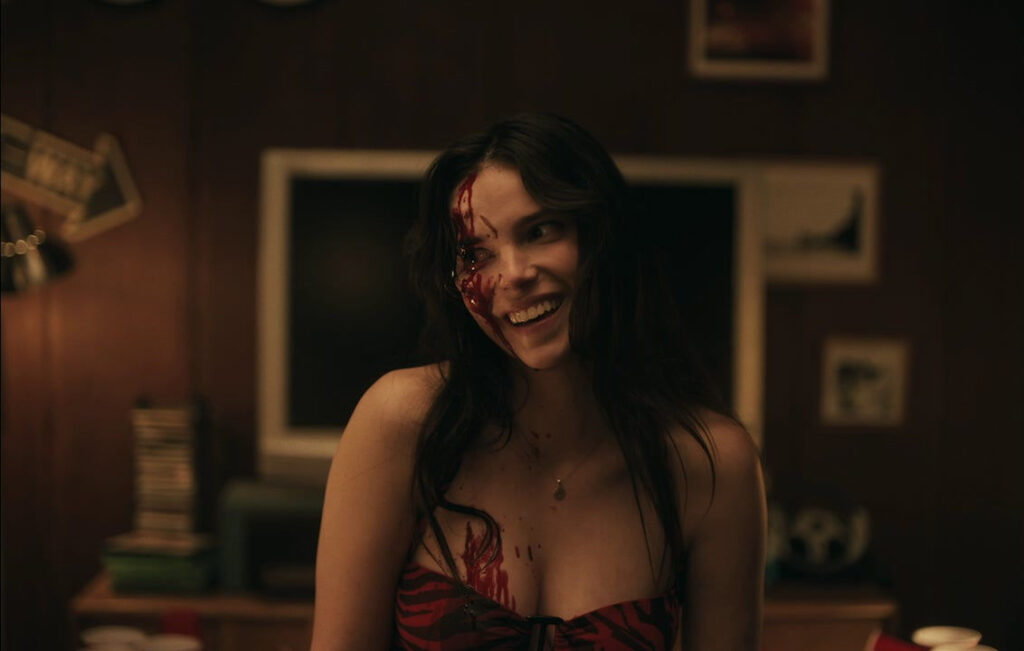
Nikki really does love him more than anyone in the world. And things are great to begin with, but her erratic mood swings become more frequent and distressing. She throws a fit whenever Bear wants space, even going as far as duct-taping the front door so he can’t leave for work. She stands in the same spot, pissing all over the floor, when Bear does leave, waiting for him to return. She exists only for him, for his fantasy. Unsurprisingly, she even grows jealous and murderous of anyone who gets in the way of their relationship. But what keeps Nikki’s frantic behaviour going is the fact that she doesn’t know if he loves her back. Bear’s character is equally sympathetic and infuriating. He might be a genuinely nice guy, but he’s passive to the point of learned helplessness and selfishness. He’s too much of a coward to tell Nikki he likes her, and then he’s too much of a coward to face the horrific reality he finds himself in—though, in his defence, this is a really tough position for someone to find themselves in. Still, Bear struggles to even placate Nikki. When she loses her distinct personality, he doesn’t seem to care—perhaps he preferred the idea of her, or maybe he thought getting the woman of his dreams would simply make all of his pain and loss disappear.
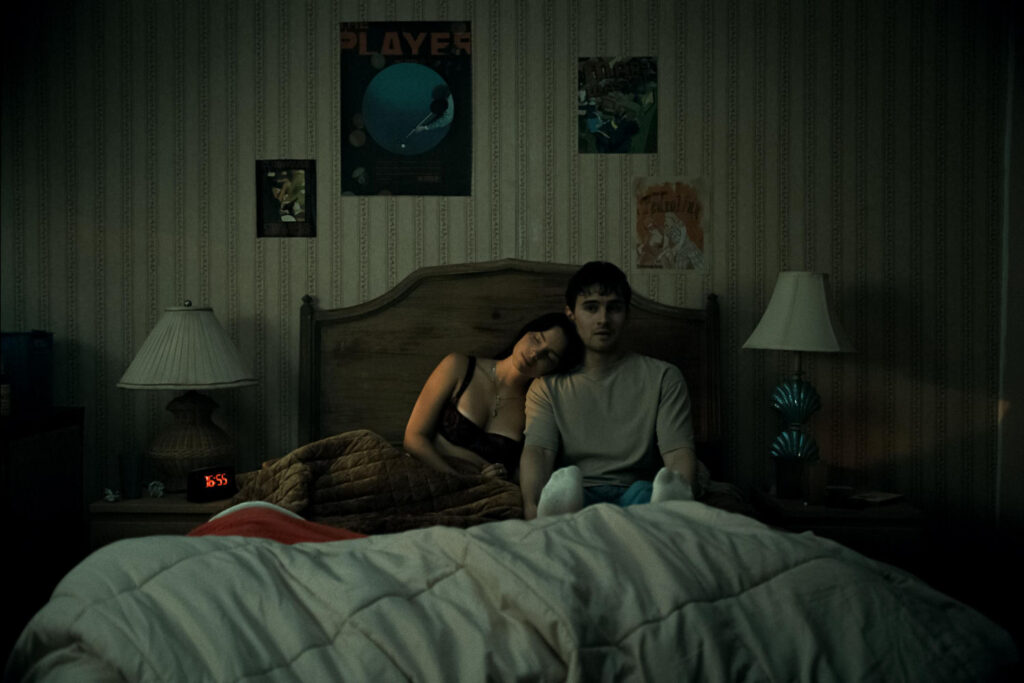
Barker’s screenplay doesn’t explicitly spell everything out for you. It asks the audience to consider the position Bear and Nikki find themselves in, but what Barker does make clear is that Bear isn’t a hero. In fact, he might be the villain and Nikki the victim. In one of the darkest scenes in the film, Nikki—in her sleep, during a moment of clarity—asks Bear to kill her, and he responds with: “What’s so bad about being with me?” Bear ends up so blinded by his own pain and desire, that he doesn’t consider things from Nikki’s point of view, even though he supposedly cares about her. He never wanted to hurt Nikki, but our actions have consequences and can hurt the ones we love. Barker explores themes of autonomy and possession, unrequited love, obsession, codependency and control, which point. While the film has many distinct story markers, its events can be read in multiple ways.
Obsession is incredibly violent, bloody, and gory with excellent special effects, but it also embodies supernatural horror with the use of horror, threat, and occasional jump scares. While magic exists in the film’s world, it’s very grounded, which only elevates its horror. Navarrette brings a lot of physicality to Nikki—her movements and facial expressions are intense, scary, and unnerving as she flies through anger, upset, horror, control, and a deep sense of underlying grief and trauma. The supporting cast are also excellent. Watching Bear’s inaction move the story forward as things keep escalating more and more out of control is almost unbearable to witness. There has never been a more infuriating character, which negatively affected some of my experience, but he had to be that way. Not only does it serve story purposes, but Bear perfectly demonstrates the themes of toxic masculinity and male loneliness through a complete deconstruction of the “Nice Guy” trope with horrifying consequences. It was always going to have a bleak, unhappy ending, but is perhaps one of the most effective “be careful what you wish for” stories. If anything, though, Obsession is a strong deterrent for passivity and inaction. Just tell the girl that you like her—or don’t, but don’t make it everybody else’s problem!
Obsession is in cinemas now.


Leave a Reply