
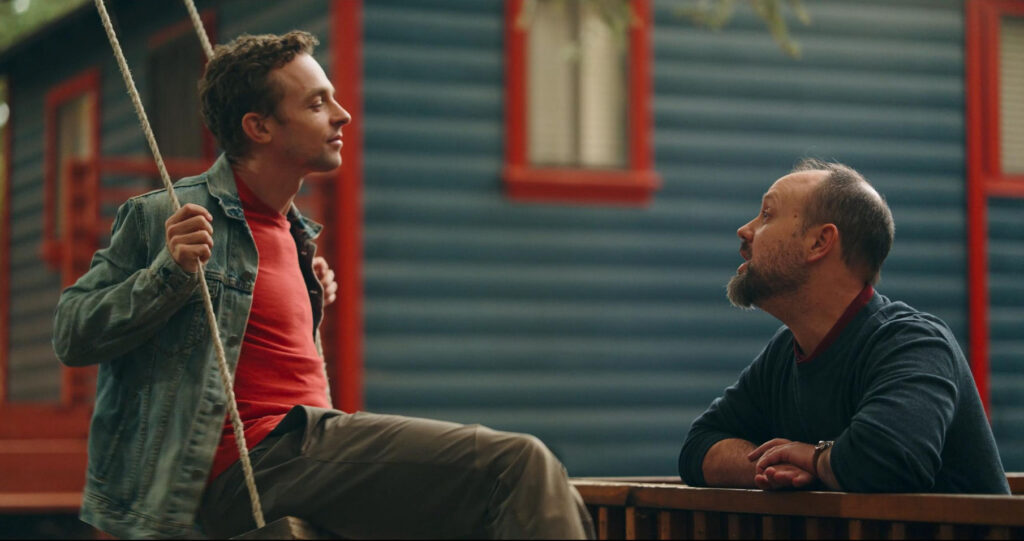
In the opening of Joe Fria’s debut feature, Shadows of Willow Cabin, Albert (Bryan Bellomo) heads to his family cabin to spend five days with Devon (John Brodsky), a man he exchanged sexually charged messages with on a dating app. Albert is a high school English teacher with a wife and teenage son who is struggling with the collapse of his heterosexual identity, while Devon is an EMT who has affairs with older married men to avoid commitment. Each man is haunted by his own baggage right from the start, which allows the horror elements to creep in and build with ease. As their bond deepens, Albert and Devon’s trauma breaks from the spiritual realm and enters the physical, until the forest won’t let them leave.
On the surface, Albert and Devon sound fairly unlikeable, but they are easy to sympathise with. The acting is a little awkward, which goes beyond the awkwardness that’s supposed to be there during Albert and Devon’s initial meeting. It takes some time to adjust to, but fortunately Belloman and Brodsky improve as they get into more of a rhythm, especially when they each get to perform their own emotional outburst. Their chemistry is also questionable, but grows more believable over time.
Both Albert and Devon have intrusive memories of trauma they once experienced, meaning the terror they experience often comes from within. While familiar to the characters, they sometimes startle, especially as their pain begins to manifest into something more physical and interact with their surroundings. You don’t always know when one of the characters is going to see a figure standing nearby or have a jarring flashback. They’re not always scary, but sometimes there’s an effective jump scare. The unpredictability makes it more engaging, and the film keeps you guessing as to whether it’s just the past living within the characters, or whether the house has an active part in it. These scenes are done very well, some with subtlety, and reflect a level of skill and creativity.
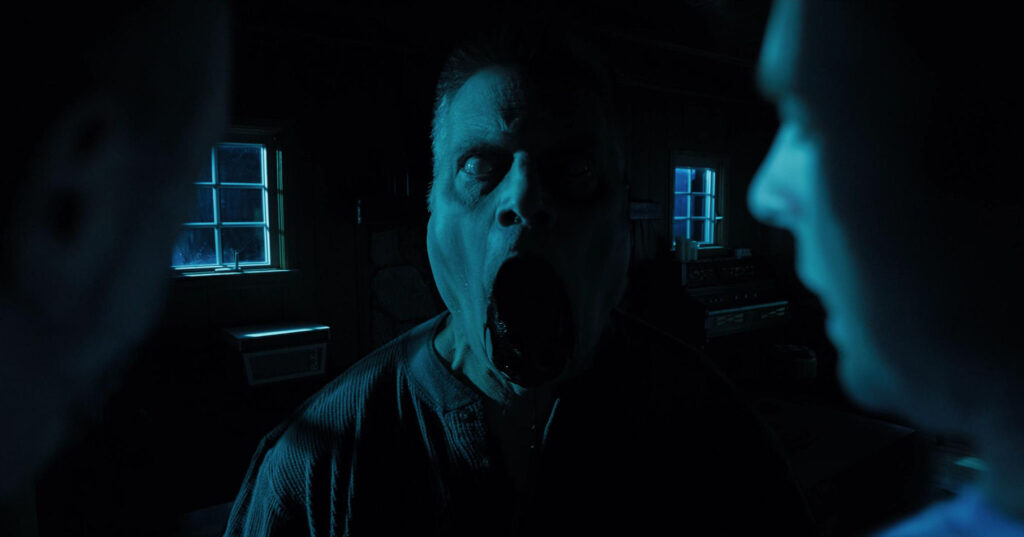
Fria is a competent director. The camerawork is often thoughtful, but he occasionally opts for more inventive framing during emotional dialogue which should capture the actor’s face. This can create unnecessary distance. Visually, David Haverty’s cinematography is a frequent treat. Cosier scenes offer warmth from the glow of outdoor lights or the setting of the sun, but light and shadow are also used to create tension and suspense, strengthening the emotional tone of each scene. The cabin Albert and Devon stay in is also beautifully captured. The kitchen in particular stands out with its red stove and dining chairs, as well as the aqua table cloth covered in red cherries and green leaves. It’s a striking image that stays with you.
Fria’s screenplay builds in some rich drama relating to Albert and Devon’s sexuality, including how it affected their past and still shows up in their present. There are complex themes of grief, shame, longing, family, religion, and acceptance. Despite these heavy themes, Fria is sure to include positive and uplifting scenes between the couple, who dance to music, laugh, kiss, and even begin to explore things sexually. Even though Albert and Devon are living in close proximity, Fria is sure to show the characters in moments of isolation, which builds up their interiority and deepens their characters.
The ending of Shadows of Willow Cabin is rather ambiguous, but has strong implications that won’t work for everyone. The film is emotionally provoking and carries deep and complex themes that many viewers will resonate with. Fria’s strong character writing and confident blending of the romance and supernatural genres allow the film to be a great addition to the microgenre of homo horror. Despite how long it took Bellomo and Brodsky to find their stride, Albert and Devon are characters that stayed with me long after the credits rolled.
Shadows of Willow Cabin is showing at Raindance Film Festival on 22nd and 23rd June in London. Click here for more information.

Leave a Reply