
Mark H. Rapaport’s Godhead, which had its world premiere at Fantasia International Film Festival, begins with a Priest (Al Warren) who finds a baby on the doorstep of his church. When the Boy (Luke Speakman) is a little older, the Priest tells him about how God created the universe in seven days—but he adds an eighth day; the day God went away because mankind was too selfish and sinful. It becomes clear that the Boy has never been outside because, as the Priest says, “It’s crazy out there.” He has led the Boy to believe that the outside world is full of war, disease, and other dangers beyond his comprehension. The Boy is so sheltered, he doesn’t even know what a strawberry is.
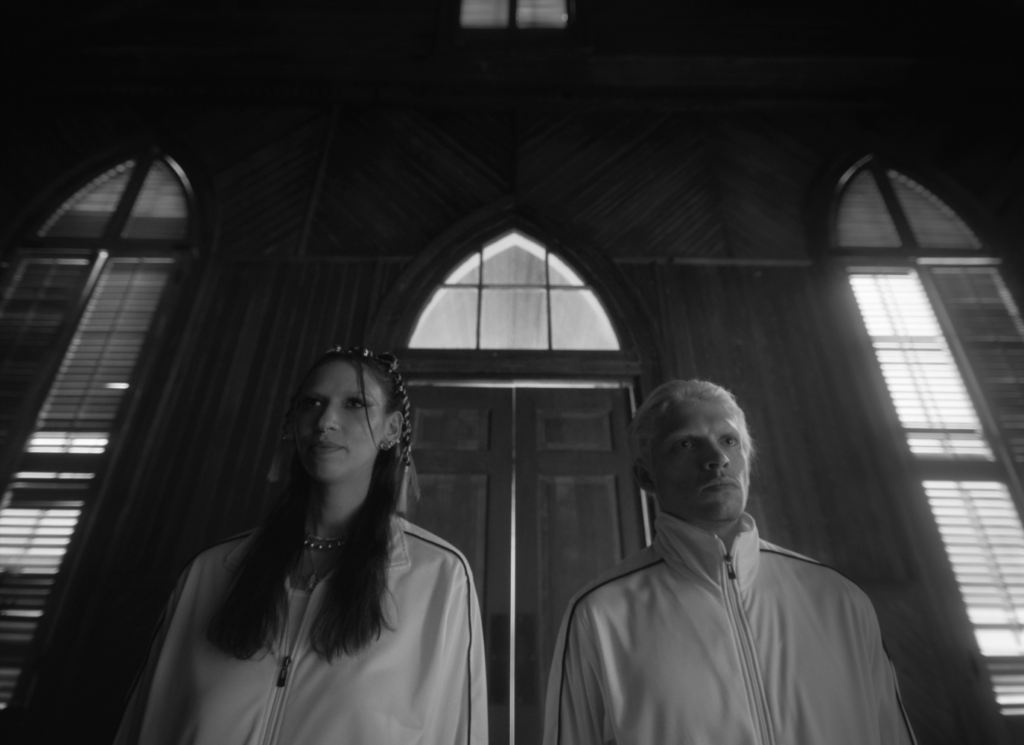
But things get even weirder when eccentric fraternal twins, who call themselves Firstborn (Sarah Coffey) and Secondborn (Kimball Farley), show up at the church in matching white tracksuits claiming one of them is the Holy Spirit. They just need the Priest to determine which one, and then shoot them with the Smith & Wesson pistol they kindly brought, so that their soul can be released back to their original, perfect state. The Priest refuses at first, believing them to be playing some kind of sick prank for laughs. Eventually, he finds himself taking part in their depraved, divine mission, which forces him to confront the depravity that exists within his own soul—a secret he has long sought to keep.
Firstborn is strong and confident, but manipulative and exploitative. She is both alluring and unnerving. Her dogmatic belief in their quest is mad and magnetic. Coffey is mesmerising every second she is on screen. Secondborn, on the other hand, is simple, awkward, and impressionable, almost like a child. Farley performs as expertly as Coffey, perfectly balancing his naivety with an underlying and aggressive instability. It’s a marvel to see two actors embody their roles so completely. Warren also offers a strong performance as the film asks if the Priest is a good man while he becomes more morally reprehensible as the film unfolds. He is a deeply flawed man who is committed to his role as a priest. Each of these actors bring so much conviction to their performances that it’s hard to look away, even during the most unsettling of scenes.
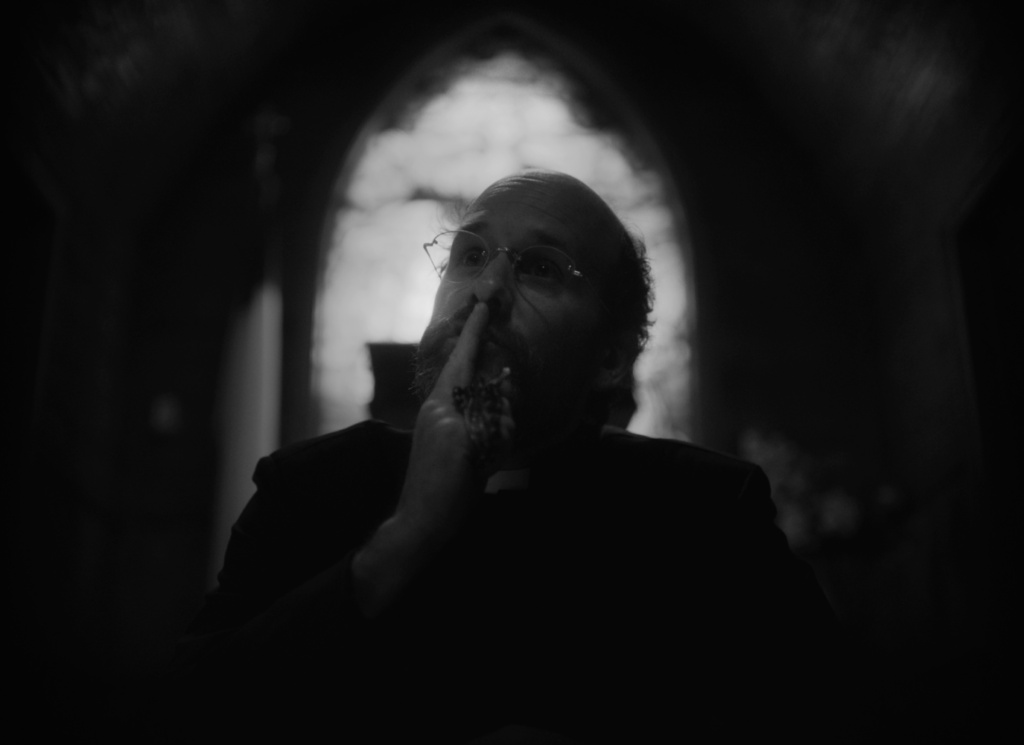
Shot in William Babcock’s high contrast black and white, Godhead is visually striking. The twins are frequently coated in a soft glow that reflects off their all-white outfits—an angelic light they may or may not deserve. There’s plenty of religious imagery and gorgeous shots of the church and the details within. There’s a scene that uses infrared in a fairly disturbing flashback which adds to the unsettling feeling. The sound design is textured in a way that is both dreamy and disconcerting, evoking different emotions in each scene.
Godhead is impressive and unlike anything I have ever seen. It’s unique and engaging which is a high achievement considering its driven primarily by conversations between its central characters and takes place in few locations. Rapaport uses taboo themes, such as paedophilia, incest, and rape, which aren’t often explored in films, to ask if everyone is deserving of forgiveness, no matter how wrong or horrifying their sin. He also explores the intensity of fanaticism and shame, which is often associated with faith—and for good reason. The question raised isn’t necessarily answered and so it would be easy to dismiss the film as provocative, but—despite the fact Godhead makes some disturbing suggestions—it’s rather thought-provoking in the bold discomfort it creates. Its morally ambiguous themes, presented in an ethereal black and white glow, immerse us in an otherworldly atmosphere which matches the feel of the film’s bizarre characters and their dogmatic mission, alongside the most heinous of their sins. It’s hard to predict where it’s going, but Godhead certainly has a few reveals up its sleeve and makes for a strange and worthwhile experience.
I must get around to watching Rapaport’s debut feature, Hippo, which premiered at Fantasia International Film Festival in 2023.


Leave a Reply