
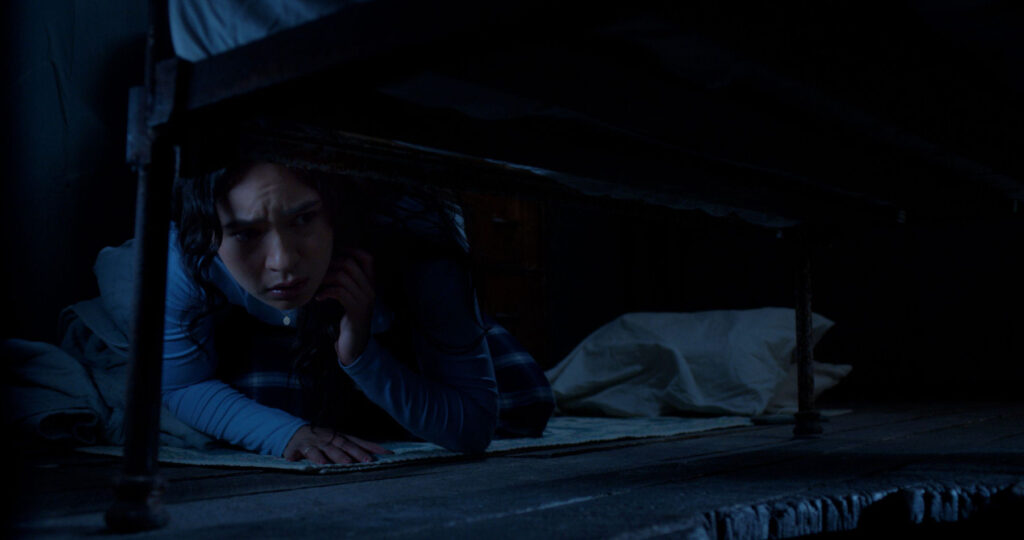
If you’ve ever suffered from a severe mental health condition, you may have viewed it as an uncontrollable force that lives inside you. But what if it externalised itself into a real presence that lurked in the shadows, an extension of yourself that forced you to confront your intergenerational trauma? Tim Riedel’s Ancestral Beasts, which had its world premiere at Fantasia International Film Festival last night, explores exactly this.
It’s been four years since her mother died and Elyse (Morgan Holmstrom), a young Indigenous woman, is still struggling. After an altercation at work, she needs stress leave, and her sister Nikki (Darla Contois) is constantly berating her for every little thing. Elyse retreats to her aunt’s (Gail Maurice) small isolated cabin in the countryside to try and rehabilitate her mental health, but when she arrives, she finds the home vacant. Elyse meets nosy neighbour Max (Josh Strait) who balances a tight line between nice and helpful, and weird and creepy. One day, Elyse thinks Max has broken into her house, but soon realises raccoons might be the culprits if the gaping hole in her bedroom floor has anything to say about it. When her sick leave is denied and her constant bickering with Nikki continues, Elyse feels worn down and suffocated. Her meditation app is the only thing keeping her afloat—a podcast called “Stolen Matriarchs” which keeps her connected to her Métis roots. The more Elyse tries to work on her mental health, the more she notices a dark presence surrounding her.
“Stolen Matriarchs” begins each episode acknowledging the land they are on before leading a guided meditation. It discusses the idea that when we acknowledge the land, we awaken our awareness, which is important because the journeys our ancestors took are a part of us. “The curses we inherit are not our fault, but we let them become our responsibility.” Riedel, who also wrote the film, was born in the ancestral homeland of the Red River Métis, and draws from his own experiences with family dysfunction and mental health. The podcast highlights the themes explored through the film, ensuring the audience understands its psychological beats and how intergenerational trauma doesn’t end with death, but can reach from beyond the grave. Elyse is also reintroduced to her estranged cousin Shayla (Shannon Baker) and makes friends with Cody (Asivak Koostachin) and McKenzie (Victoria Gwendoline), who also get tangled up in Elyse and Nikki’s intergenerational trauma.
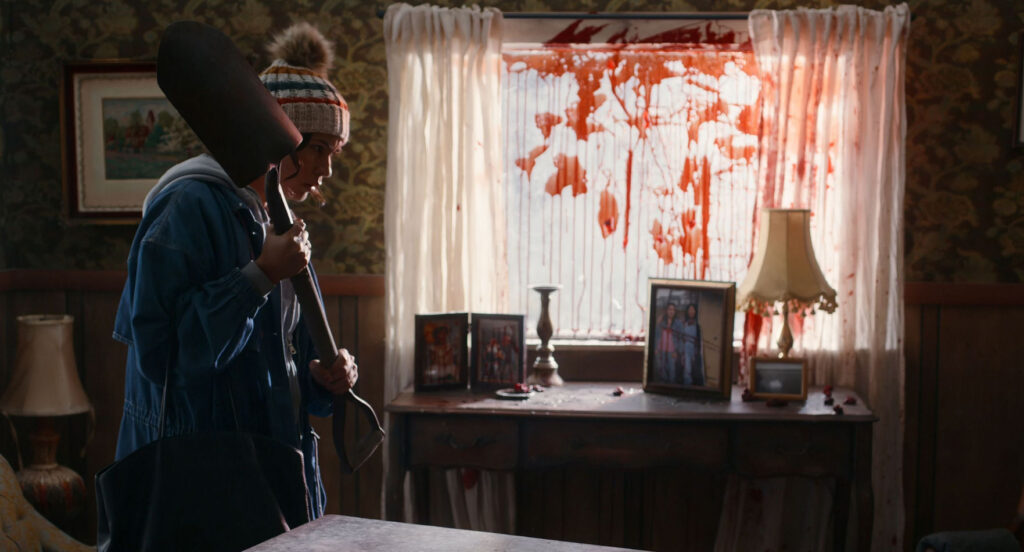
Joseph Forte’s cinematography is impressive as he creates an eerie atmosphere with effective use of shadow. Riedel’s directing complements this as he allows the camera to capture dead space in darkness, creating the sensation that Elyse is being watched by a dark presence—a presence that makes Ancestral Beasts a creature feature alongside a psychological horror. The creature design is creepy. There are great shots of Elyse in bed with a sinister, crooked hand creeping over her and touching her lips with blood. The hand itself has human qualities, but doesn’t seem human at all. Eventually, more of the creature is revealed and it’s not as scary as it had once seemed, which feels intentional—the creature represents Elyse’s mental health and the depression and anxiety that became the antagonist for two generations of Indigenous women. The creature is simple but is used effectively and becomes sort of fun despite the danger it suggests. The sound design is also a strength, particularly the noise the creature makes which borders on ASMR. It’s clear, crisp, and close—the perfect combination to get under your skin.
Holmstrom is fantastic as Elyse. While traumatised, she is fiery and is clearly doing her best to survive the hand she’s been dealt. Elyse’s relationship with Nikki is a toxic and co-dependant one that is shown through mean dialogue. The tension and history between them is clearly felt, though I would’ve liked to have seen more moments that really solidify the ups and downs of their dynamic. Contois is a force but I found her portrayal to be too unlikeable in a way that is generally off-putting. It’s hard to sympathise with her at all, but this may be intentional as the film works to illustrate the different ways mental health problems can affect people—even those within the same family. Nikki is someone who shoves down her trauma and gets on with things, and then criticises Elyse for not being as put together and struggling more openly. It’s great to see this dynamic portrayed in a film because it’s a very common experience—many people containing both sides within themselves. It’s something that may come as a hard but relatable slap in the face for those who have experienced this type of family dysfunction.
Ancestral Beasts is about taking responsibility for your life and showing up for yourself. The podcast continues to echo the film’s messaging right to the end: “Peace is not given, it’s up to you to create it. In the real adult world, the only person coming to save you, is you.” Riedel’s writing is empowering and sympathetic towards mental illness, but it clumsily suggests community can be destructive—and sometimes that is the case. The themes aren’t always explored well, but Riedel makes a good effort. Just like all films that tackle this subject, it’s bound to piss some people off, but it will find its audience. In his narrative feature debut, Riedel has delivered a strong horror that teaches us to always get back up again. Mental illness doesn’t always win, it’s something you can learn to live alongside.

Leave a Reply