

Based on the Julia May Jonas book of the same name, Netflix’s Vladimir follows Rachel Weisz’s unnamed protagonist, a creative writing professor whose university chair husband, John (John Slattery), is suspended pending an investigation into his sexual relationships with numerous students. Breaking the fourth wall frequently, the protagonist tells us that she and John have a longstanding agreement, something today’s youth would call an open marriage—which was certainly news to their 27-year-old lawyer daughter, Sid (Ellen Robertson). The protagonist isn’t bothered, though, especially as she becomes fixated on her new and younger colleague, Vladimir Vladinski (Leo Woodall), who just moved to town with his wife (Jessica Henwick) and their daughter.
Instead of focusing on John’s affairs, Vladimir explores the perspective of an older woman. In her 40s, the protagonist has experienced how ageing affects the way women are perceived, both in their personal lives and their careers. She is a novelist who is well-liked by her students and prides herself on having the most popular class in the department—though this is a truth that has long been waning. And yet, the protagonist is bursting with sexual desire and finds inspiration for her new novel from her daily interactions and sexual fantasies about Vladimir, which are very relatable. The more that falls apart in her own life, the more her lust for Vladimir increases. In her class, the protagonist covers works like “Rebecca” and “The House of Mirth,” reading out the parts that discuss sex, desire, and obsession. In “Rebecca,” she ties the narrator’s obsession with her husband’s late wife to the modern obsession of stalking your partner’s ex on social media and wondering what private jokes they’ve shared.
Weisz’s protagonist is a complex and charismatic woman. She is sharp-witted, has a wry sense of humour, and for the most part, she behaves appropriately in social situations and keeps up appearances. But she is also deeply manipulative. She says one thing, but then tells us—the audience—another. While confident in some aspects of her life, she displays insecurity in others, especially through her adolescent-like crush on Vladimir. “If he looks back, he loves me.” Weisz is captivating in this role. She is easy to root for even when she’s unlikeable, even when certain situations grow somewhat absurd. This is a comedy, after all. Woodall’s Vladimir feels fairly bland next to Weisz, but I suppose that depends on how attractive you find him. He gives a strong performance nonetheless, as curiosity about his character grows. The whole cast are wonderful, each complementing each other perfectly.
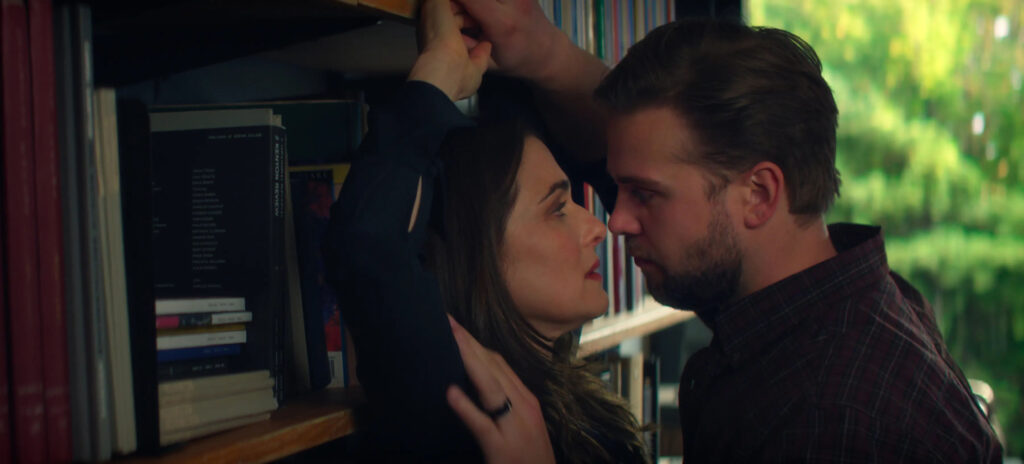
Vladimir challenges the rigid morality born from the well-intentioned #MeToo era, which eradicated nuance and grey areas. “When I was in college, I wanted to fuck all my professors,” the protagonist reveals. “Old, young, male, female, but… I was too timid.” She goes on to explain that she doesn’t understand how consensual affairs that were fun, not despite the power dynamic, but because of it, could be thought of as hurting or damaging after the fact. She raises the idea that young adults are still adults with agency. While I’ve not read the book, these strong points are put forward almost immediately in the series’ opening episode, which was written by Jonas herself. The series later explores the ways the protagonist is impacted by her husband’s sex scandal. Were things really just “different” back then? Should she speak out against him? Will she be more likeable, especially as an older woman, if she does? Will this make her students feel more comfortable? Is that her responsibility?
The series’ comedy carries a satirical edge to it, especially as it pokes fun at the generational divide, which is aimed predominantly at Gen Z. In one scene, Sid puts her headphones on following a brief argument with her mother in the car. Is that any way for someone approaching 30 to behave? Maybe everyone reverts to such behaviour, no matter their age, when dealing with their parents. While speaking to Vladimir about why he didn’t turn his paper in, a student explains he’s been going through stuff lately: “I just came out. I’m gynesexual. I’m attracted to femininity, even if there’s penises.” Is this kid serious? I suppose if I found out I was attracted to femininity even if there’s penises, I’d probably not turn my paper in either. Vladimir has lots of funny and interesting scenes, across all generations, that put forward the question of what’s appropriate and what’s not. However, the series is not interested in providing all the answers, which reflects the complex reality of life.
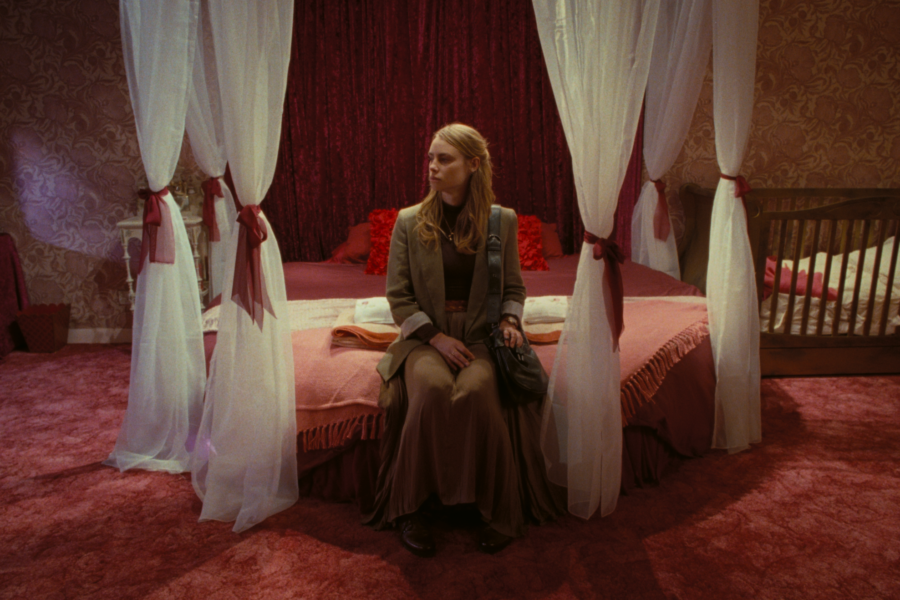
Vladimir is a visually rich experience. The set design, colour grading, costume, and hair and makeup are all huge strengths, alongside the writing and directing. There are a couple of ear-catching needle drops, though many standouts, such as Patti Smith’s “Dancing Barefoot,” happen just as the credits begin to roll. Still, the series is well-paced over eight episodes, each 30 minutes or less, as it leaves you eager to find out what will happen. Will the protagonist hook up with Vladimir, or keep her fantasies to herself? How will her husband’s hearing go? There are some things to frustrate, some to please, and others to audibly make you go, “What the fuck are you doing?” at the protagonist—which is perfect entertainment. But it has to be said that this series isn’t anywhere near as steamy as you’d hope or expect.
Vladimir is a fascinating and humorous exploration of intense obsession, female desire, betrayal, and power. It boasts a highly compelling, multifaceted older female character who has an intense appetite for all that she desires. The series opens a worthwhile conversation around the complex nature of not just age-gap relationships, but relationships with a power imbalance. Are they always bad? Vladimir is going to tell you a story about people, not about morals. While the protagonist is driven by her sexual obsession and desire for approval, the series is mostly about having agency in your own life.
Vladimir is out on Netflix on 5th March.


Leave a Reply