
*Contains story spoilers*
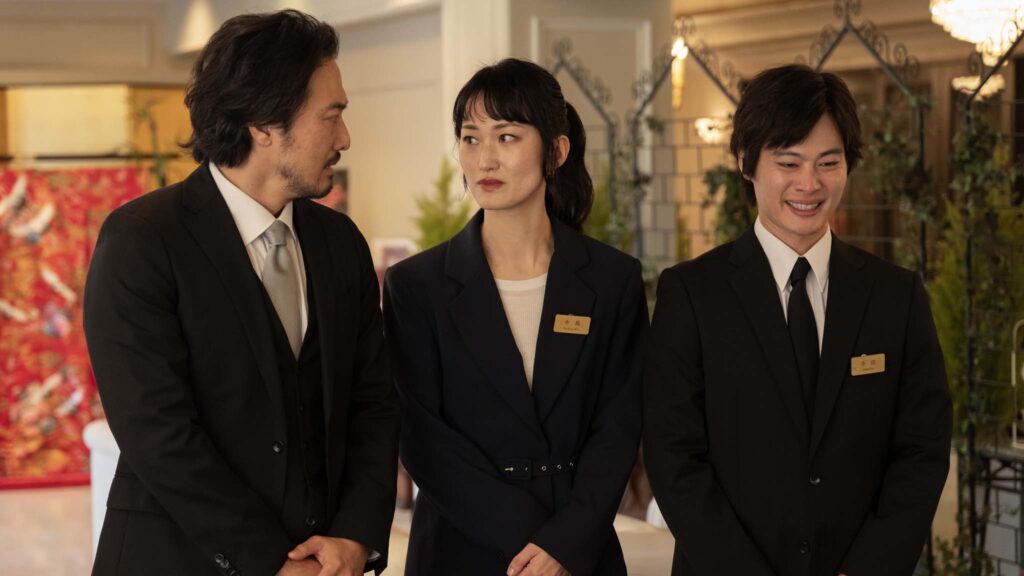
Rental Family follows Phillip Vanderploeg (Brendan Fraser), an unemployed American actor who is still living in Tokyo after finding success in a wacky Japanese toothpaste commercial seven years prior. Things start to change for Phillip when he lands the unusual gig of working for a company which provides actors to play stand-in roles for strangers, which is something that really exists in Japan. Shinji (Takhiro Hira), the owner of Rental Family, tells Phillip that they “sell emotion” by playing a role in a person’s life which helps them to connect to what’s missing. Confused by the premise, Phillip says they could just get a therapist, but Shinji explains it’s not that easy as mental illness is stigmatised in Japan. Rental services, then, are a great vehicle for exploring Japanese culture and customs through the eyes of a gaijin, as they help with the unique aspects of saving face, social etiquette, social isolation (hikikomori), and various stigmas.
When Phillip is first introduced to the rental family, which also consists of Aiko (Mari Yamamoto) and Kota (Kimura Bun), they are performing a funeral for a man who is still alive. Phillip only discovers this fact when the man in the open casket sits up suddenly, startling him. “I finally feel like I deserve to exist,” the not-so-dead man tells Shinji afterwards, while thanking him for the experience. When the room has cleared, Phillip curiously climbs into the casket, wondering what it might be like. He is then startled by Shinji telling him, “You know, we cremate bodies in Japan,” implying he would not be able to rest there indefinitely if he were deceased. It’s a comedic moment that offers further insight into Japanese customs, as cremation isn’t as high in the United States. The scene also highlights the extent of the services Rental Family provides, the gaps they fill and what they can do for people. While this funeral service is common in Japan, it gives people a new lease on life.
Phillip’s first role is to marry Yoshie (Misato Marita), a lesbian married to a woman, in a traditional marriage performance for her parents before she and her wife run off to Canada to start their new life. Phillip struggles with the morality behind this and almost doesn’t go through with it, saying it’s a lie and it’s messing with people’s lives. “Can’t she just leave her family?” he asks, but Aiko explains that Yoshie can’t because she loves her family. The goal is to give Yoshie her freedom and her parents happy memories. This is the first time Phillip is experiencing a significant clash in the social norms between Japan and America and why it’s so important for some Japanese people to go to these lengths. It also allows the audience to experience this confusion alongside him. During this scene, Aiko calls Phillip a gaijin, explaining that he will never understand how things are in Japan, despite the fact Phillip has been living there for seven years. This highlights how difficult it can be to truly understand another culture.
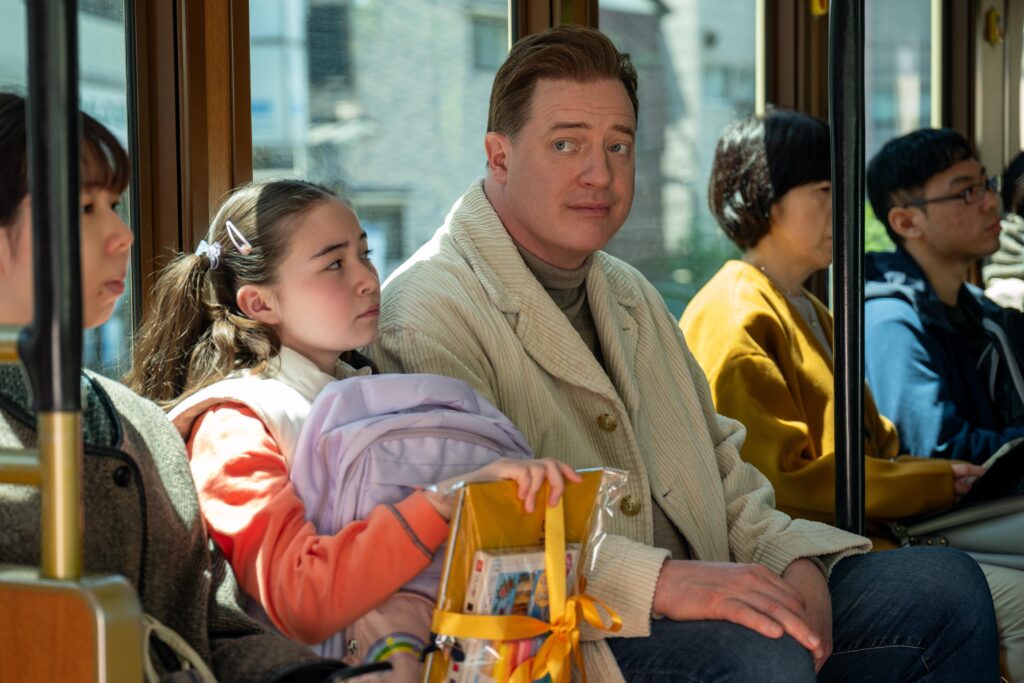
Phillip’s next client is a mother (Shino Shinozaki) who hires him to pretend to be her daughter Mia’s (Shannon Mahina Gorman) father so they can get her into an elite school as being a single mother is looked down upon. While she initially hates him, Mia soon warms to Phillip because he listens to her unlike her mother who, she says, just tells her what to do. Her mother wants the best for her and this dynamic comments on the different roles people can have in our lives and the lengths some people will go to to give their children access to good opportunities. This is one of the more morally problematic cases Phillip works on, but it’s something that really happens in Japan. Speaking to The Atlantic in 2017, Ishii Yuichi, founder and head of Family Romance, said: “I played a father for a 12-year-old with a single mother. The girl was bullied because she didn’t have a dad, so the mother hired me. I’ve acted as the girl’s father ever since. I am the only real father that she knows. […] If the client never reveals the truth, I must continue the role indefinitely. If the daughter gets married, I have to act as a father in that wedding, and then I have to be the grandfather. So, I always ask every client, ‘Are you prepared to sustain this lie?’ It is the most significant problem our company has.” This dilemma is one of the film’s greatest themes.
Phillip’s third client is retired Japanese actor Kikuo (Akira Emoto) who has dementia. His daughter Masami (Sei Matobu) hires Phillip to pose as a journalist who wants to profile Kikuo’s career. As Masami keeps Kikuo under constant surveillance, he asks Phillip to secretly take him to his abandoned childhood home 800 miles away in Amasuka. Although Phillip initially declines to appease Masami‘s wishes, he eventually caves, feeling it’s the right thing to do for his client. While there, Kikuo digs up a time capsule he buried long ago, containing photos of him as a young man and his first wife who died from illness shortly after he left to pursue an acting career in Tokyo. It’s an emotional journey which Kikuo tearfully thanks Phillip for. During one of their sessions, Phillip joined Kikuo in praying at a Shinto shine, which he revisits at the end of the film. This is thematically strong in bonding Phillip to Kikuo and Japanese culture.
Working for Rental Family allows Phillip to meet people of all ages and from all walks of life, and form genuine emotional connections with people he never would have met otherwise. Each situation is different, especially as some know he’s a hired actor while others do not. The time spent with his clients gives Phillip a sense of purpose and alleviates his loneliness, but it can bring forth strong moral dilemmas. Phillip went as far as to turn down the opportunity of a lifetime for his acting career in order to keep a promise he made to Mia, who believed him to be her father, but perhaps this taught Phillip what really matters to him.

It’s a strength of director Hikari and co-writer Stephen Blahut’s writing that, in addition to the fantastic emotional acting, that you can easily understand the motivations of all the characters—even if you don’t always agree with their actions. The Rental Family team don’t always get a lot of screentime, but they are excellent actors who portray so much context during each scene they share. Rental Family also highlights some other problems within their company: Aiko commonly performs the apology service, which often includes her standing in as a mistress to apologise to the wives of unfaithful husbands, which usually results in them physically assaulting her. By the film’s end, they have discontinued this service. The rental family are their own found family and have to look out for one another.
Rental Family is a gorgeous looking film, which is a credit to Japan’s many beautiful locations and Takurô Ishizaka’s stunning cinematography. There’s a scene at what looks to be the Borderless teamLab art collective, an immersive museum where artworks change based on the presence of people and their interactions with the art, which is visually striking. But any setting—Phillip’s small flat, the train station, the bustling city, restaurants—is interesting and well-shot, each capturing the magnetism of Tokyo. The film overall is well-crafted in its directing, lighting, pacing, set designs, location, casting and performances. The only issue that stood out was with the editing as there are some bad cut away shots they don’t sound match to a character talking or laughing.
Rental Family is an excellent companion film to Sofia Coppola’s Lost in Translation as they share similar themes of an actor feeling lonely in Tokyo and connecting with someone else in pursuit of purpose and human connection. Rental Family evokes emotion with ease during even the smallest of moments, which is a credit to the actors, the writing, and the visual components of the film that set its tone. You can feel how simple it can be to form genuine bonds with others when an effort is made to connect, no matter how big or small. There are so many small acts of kindness, understanding, and compassion in this film which moved me to tears instantly. Its empathy is so heartwarming and beautifully touching, but Rental Family doesn’t shy away from showing the harm that can be caused by these services, on their side. Instead, it presents it as the morally complex service it is, full of good and bad. It’s not a perfect solution to Japan’s loneliness epidemic (something that is also becoming more prevalent in other countries), but it is something. It speaks to the honourable and human pursuit of providing and seeking support and connection.
Rental Family was released in UK cinemas on 16th January.


Leave a Reply